Mastering the Fundamentals of Wood Joinery: Building Secure and Robust Connections.
One of the most important woodworking skills you’ll learn is joinery, which is how wood pieces are joined. Strong joinery is key to sturdy and long-lasting furniture and other woodworking projects. Without good joinery, your projects can be weak and fall apart.
Learning the basics of joinery can help you create better quality joinery that is stronger and more professional-looking.
- Why Joinery is Important
Joinery is important because it holds wood pieces together securely. It helps to ensure that a woodworking project stays intact over time.
When joinery is properly made, the joints are strong and stable. When joinery is not made properly, the joints are weak and can lead to the failure of a woodworking project.
- Basic Butt Joint
A basic butt joint involves joining two pieces of wood together at the ends or sides of the pieces.
It is simple, but not the strongest joint by itself. Typically, this type of joint needs to be strengthened by screws, nails or glue for a durable joint.
- Lap Joint for Added Strength
In a lap joint, you remove parts of two wood pieces to overlap each other. It offers more surface area for the joint. This makes it stronger than the basic butt joint.
A lap joint is used when you need additional strength for frames and structure.
- Mortise and Tenon Joint
The mortise and tenon joinery is a time-tested woodworking joint that creates a very strong and sturdy connection. A mortise is a recessed hole in one piece of wood and a tenon is a projection on the other piece of wood that fits into the mortise.
This type of joint is very tight and secure, and often used to join wood for furniture.
- Dowel Joint
The dowel joint joins two pieces of wood together by inserting a dowel or wooden pin into a pre-drilled hole in the two wood pieces. It helps to provide alignment and strength to the joint.
The dowel joint is a good clean method to join wood without using any additional hardware.
- Accuracy is a Must
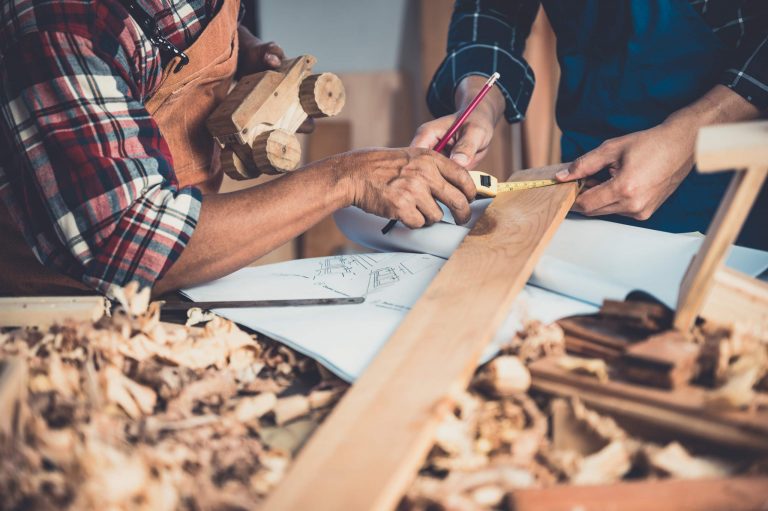
Whatever type of joinery you use, accuracy is important. Misaligned or loose fitting joints are weak and can be a reason why joinery will fail.
Good measuring, cutting and fitting is needed to create a strong and long lasting joint.
In Conclusion
Joinery is a vital skill in woodworking that will affect the quality and durability of any woodworking project. By learning and practicing different joinery techniques you can achieve a higher level of strength and reliability in your woodworking projects.
With some practice and time, these techniques will become more natural and easy to apply. These skills will give you the foundation to work on more complex and professional projects in the future.
The WoodMastery Course teaches you these skills and how to apply them in real projects.